
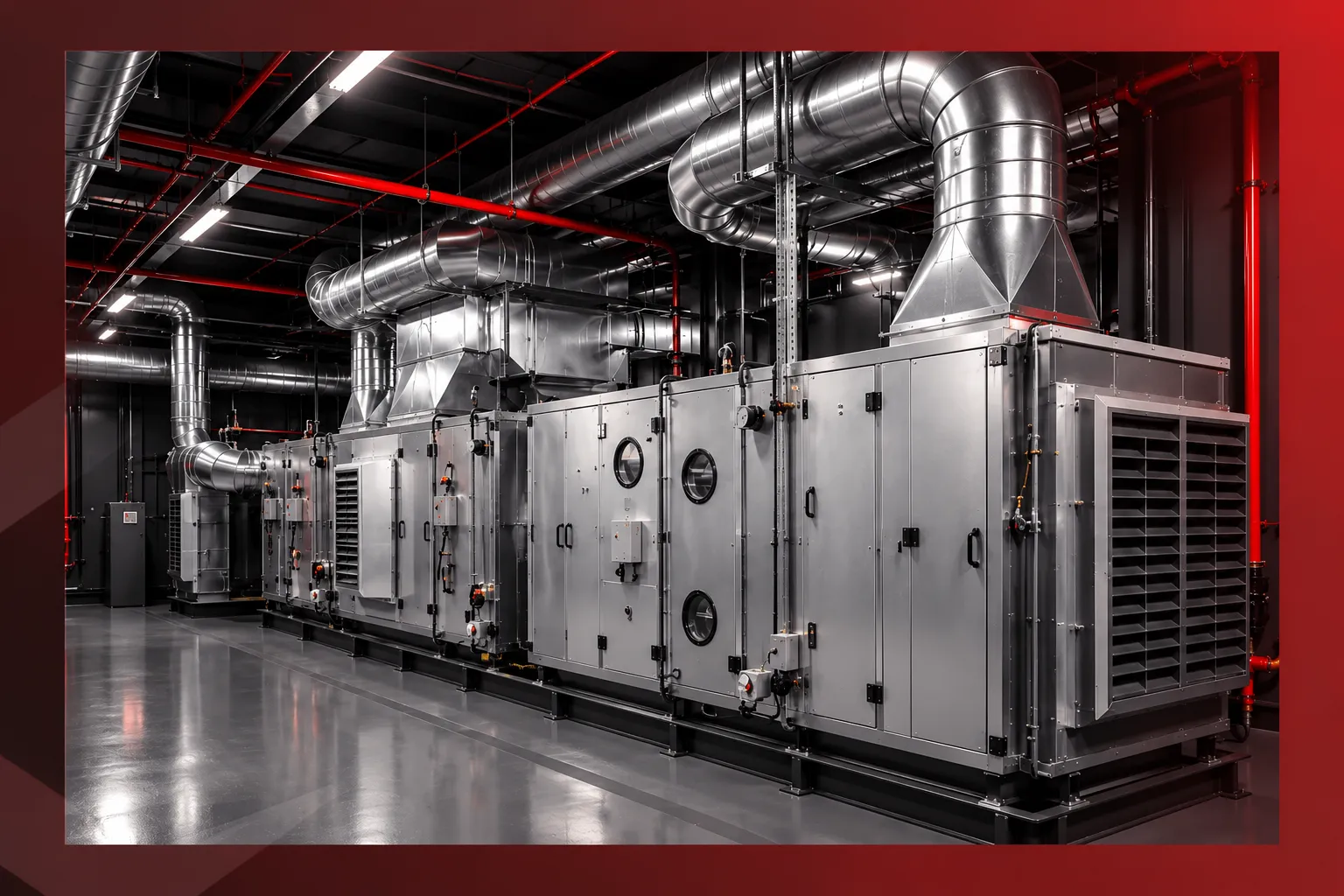
Central Heating Systems
A comprehensive guide to central heating systems by I-CON MEP Solutions. Explore hot water and underfloor heating options, precise thermal load calculations, and energy-efficient designs tailored for your project.
Are you looking for a solution that guarantees a warm and comfortable atmosphere during the winter season along with higher energy efficiency? Central heating systems are among the modern solutions that provide balanced heat distribution across various spaces, with the ability to control system performance according to the needs of each project.
The success of a central heating installation does not depend on selecting equipment alone; it starts with precise design and thermal load calculations, followed by execution by a specialized team to ensure operating efficiency and long-term sustainability.
In this article, we will learn how central heating systems work, their most prominent types, the advantages of their implementation, as well as the role of I-CON as one of the leading central heating companies in Egypt in providing integrated solutions within the MEP framework for various projects.
What Are Central Heating Systems?
Central heating systems are engineering systems designed to produce and distribute heat from a single central source to different parts of a building to achieve balanced thermal comfort.
Central heating systems rely on a group of integrated components working together to deliver effective heat distribution within the building. The choice of each component and its installation method directly impacts system efficiency and operational lifespan.
The main components of the system include:
- Heat generation unit: Such as boilers or heating units, which are responsible for providing the primary thermal energy source for the system.
- Distribution network: Includes pipes and conduits that transport hot water or the heat-transfer medium to various heating units.
- Indoor heating units: Such as radiators or underfloor heating systems that transfer heat into the space.
- Control systems: Such as thermostats that help adjust temperatures and achieve higher operating efficiency.
- Energy source: Whether gas or electricity, depending on the nature of the project and operational requirements.
At I-CON MEP Solutions, we design and coordinate central heating systems according to the nature and needs of each project to ensure balanced heat distribution and appropriate operating efficiency. Contact us to evaluate your project's requirements.
How Do Central Heating Systems Work?
Central heating systems function by generating heat, transporting and distributing it inside rooms, while controlling the temperature and continuously repeating the heating cycle.
The operation of the system takes place through several basic steps:
- Heat generation: The process begins by operating the boiler to heat water in hot water heating systems, or heating air in warm air systems, until reaching the required temperature.
- Heat transport: In hot water central heating systems, hot water is pumped through a network of pipes to radiators or heating systems installed beneath floors or inside walls. Warm air systems rely on ducts to transport heated air to rooms.
- Heat distribution: Heat transfers from the heating units into the room's air, either via radiators or heated floor/wall surfaces, providing a suitable temperature within the space.
- Temperature control: Thermostats and temperature regulators help automatically adjust system operation according to the desired temperature. The building can also be zoned to control heating and reduce energy consumption.
- Cycle recurrence: After water or air loses part of its heat, it returns to the heating unit to be reheated, continuing the cycle to maintain the desired temperature.
Why Might You Need a Central Heating Installation?
Carrying out a central heating installation provides a more comfortable and efficient thermal environment by distributing heat evenly across different parts of the building.
The key advantages of central heating systems include:
- Even heat distribution: The system helps maintain a balanced temperature across various rooms, instead of leaving certain areas colder than others.
- Better operational control: Control systems allow temperature adjustment based on user needs and the nature of each space.
- Higher energy efficiency: Proper system design helps utilize energy more efficiently and reduces thermal loss.
- Quiet operation: Central heating systems operate quietly, making them ideal for homes and spaces requiring a comfortable, quiet environment.
- Preserving interior design: Central heating systems like underfloor heating offer practical solutions without impacting the aesthetic appearance of the space.
- Suitability for various projects: Central heating systems can be designed to fit all facilities, such as villas, hotels, administrative buildings, and commercial projects.
At I-CON MEP Solutions, we help you choose the right heating system for your project, analyzing building needs and designing a solution that delivers thermal comfort and operational efficiency. Contact us now to discuss your project requirements and receive proper guidance to start execution.
I-CON: A Leading Central Heating Company in Egypt
I-CON is considered one of the best central heating companies in Egypt, offering integrated engineering solutions within the MEP framework, from design to execution and commissioning.
We offer central heating systems tailored to each project's needs. We begin by studying the nature of the facility and operational requirements, then selecting the appropriate solution regarding system type, unit distribution, and required thermal load calculations to achieve optimal performance.
Relying on our engineering team's expertise in executing mechanical, electrical, and plumbing works, we achieve full coordination between the heating system and other building systems to prevent conflicts and ensure more efficient execution throughout project stages.
Whether the project is residential, commercial, or administrative, I-CON provides all central heating systems that combine engineering precision, operational efficiency, and reliability, serving as a trusted partner for developers, contractors, and property owners seeking integrated MEP solutions.
Advantages of Central Heating Installation with I-CON
The advantages of implementing central heating systems with I-CON include precise engineering design, integrated execution, and solutions tailored to each project's needs.
At I-CON MEP Solutions, we do not begin system execution before understanding the facility's nature and operational requirements. We rely on studying technical details to choose the most suitable solution regarding heating type, unit distribution, and required system capacity.
Key advantages of executing central heating systems with I-CON include:
- Precise engineering design and calculations: We determine thermal loads and project needs to deliver a system that operates efficiently and minimizes energy waste.
- Integrated solutions within the MEP framework: Leveraging comprehensive specialization in mechanical, electrical, and plumbing systems to achieve the highest level of coordination and integration across all project components.
- Selecting the right system for each facility: We provide suitable solutions based on usage nature, whether through hot water heating systems or underfloor heating systems.
- Organized phase-by-phase execution: Adhering to a phased action plan starting from network rough-ins and installations to testing and verifying full system readiness for operation.
- Easy control and operational efficiency: Providing advanced control systems that allow reaching desired comfort levels while managing consumption effectively and conserving energy.
- Preserving interior design: Heating units can be integrated into the design, while underfloor heating offers a concealed solution that saves space and preserves aesthetic appeal.
With I-CON, you don't just get a heating system; you receive an integrated engineering solution designed to suit your project's nature and deliver stable, long-term performance.
Types of Central Heating
Types of central heating vary according to the power source and heat distribution method, with the appropriate system determined by the facility's nature and operational needs.
Prominent types of central heating used in projects include:
Hot Water Central Heating
A hot water central heating system relies on heating water inside a boiler or central heating unit, then pumping it through a pipe network to heating units distributed throughout the building, such as radiators or underfloor heating systems.
After heat transfers to various spaces, the water returns to the heating unit to be reheated, continuing the operating cycle. A hot water central heating system features balanced heat distribution, temperature control capabilities, and can be used alongside systems like underfloor heating.
Underfloor Heating System
An underfloor heating system relies on installing a network of pipes beneath the flooring in hot water heating setups, or heating cables and mats in electrical systems, to distribute heat evenly from the floor upward.
Key features include:
- Uniform heat distribution throughout the space.
- No need for visible radiators, saving space and preserving interior design.
- Providing a high level of thermal comfort.
- Possibility of integration with modern heating sources, such as heat pumps.
An underfloor heating system requires careful planning prior to flooring installation, especially in water-based systems, to ensure proper distribution of the heating network.
Gas Heating Systems
A gas central heating system relies on using a gas-fired boiler to generate heat, which can be used to heat water and distribute it through a pipe network to radiators or underfloor heating systems.
This system provides balanced heating for the building with temperature control, making it suitable for projects with the necessary gas infrastructure.
At I-CON MEP Solutions, among the best central heating companies in Egypt, we determine the most suitable system for each project through a detailed study of engineering and operational factors, ensuring a solution that achieves the ideal balance between thermal comfort, safe execution, and performance efficiency.
Which Is Better: Underfloor Central Heating or Radiators?
Choosing between underfloor heating or radiators depends on the nature of the project, required heating speed, as well as installation and operational costs.
Before deciding, it is important to understand the nature of each system: underfloor heating relies on a sub-floor network to distribute heat over a larger area, whereas radiators rely on wall-mounted units to transfer heat to the surrounding air.
|
Comparison Point |
Underfloor Heating |
Radiators |
|
Heat Distribution |
Balanced distribution across the entire floor area |
Heat concentrated near the heating unit |
|
Interior Design |
Does not affect the final look of the space |
Requires wall space for unit installation |
|
Heating Speed |
Takes longer time to reach target temperature |
Faster at heating the space |
|
Best Usage |
Villas and projects prioritizing design & long-term comfort |
Spaces requiring faster thermal response |
|
Execution Stage |
Preferred during construction & early finishing stages |
Can be installed with greater flexibility |
You can determine the right system for your facility after evaluating the project and conducting a central heating design and load calculation by contacting us at I-CON MEP Solutions—because system success depends not just on its type, but on its compatibility with the space's needs and operational mode.
Central Heating Cost in Egypt
The cost of central heating systems varies from one project to another based on specifications; therefore, a unified price cannot be set for all facilities. Cost is influenced by system type, area size, thermal loads, and the quality of components used.
- Type of heating system: Wall-mounted heating using radiators differs in cost from underfloor heating systems, along with differences in equipment and component costs for each system.
- Area and thermal loads: Building area, ceiling height, and thermal insulation quality directly impact the required boiler and equipment capacities.
- Component quality & fittings: Costs vary based on network specifications, piping, valves, and the precision of control systems used for energy management.
- Engineering works & execution: Costs include detailed engineering load calculations, piping layout, field installations, up to testing and commissioning.
At I-CON MEP Solutions, our workflow begins by studying project requirements and carrying out necessary engineering calculations to design the central heating system, ensuring a balanced engineering solution that yields maximum operational efficiency at the best possible long-term cost.
Central Heating Design and Calculation
Central heating design and calculation relies on studying the building's thermal loads and determining equipment capacities and distribution networks according to each space's requirements.
Key stages of central heating design and calculation include:
- Thermal load calculation: Determining the required thermal energy for each architectural space to reach target thermal comfort rates.
- System selection: Technical comparison between hot water heating systems, underfloor heating systems, or solutions best suited to the facility's nature.
- Equipment capacity specification: Calculating operating capacities for boilers, pumps, terminal units, and auxiliary components in accordance with consumption rates.
- Distribution network engineering: Designing pipe routes, sizing pipe diameters, and analyzing flow hydraulics to ensure balanced heat delivery across all project areas.
- MEP systems coordination: Achieving engineering integration between the heating network and mechanical, electrical, and plumbing works to prevent field conflicts during execution.
At I-CON MEP Solutions, we rely on project analysis and thermal load calculations before selecting equipment and designing networks, delivering clear central heating installation guidelines and execution schematics tailored to the facility's operational needs.
Contracting & Implementation Steps for Central Heating Systems
Contracting and implementation steps for central heating systems begin with project study and system design, followed by component supply, installation, and testing prior to handover.
Contracting and execution stages include the following steps:
- Studying project requirements: Defining the nature of the facility, spaces to be heated, and expected operating patterns to establish an initial technical concept.
- Site technical inspection: Conducting an on-site inspection to review architectural drawings, define pipe routes, and assess rough-in conditions.
- Engineering design & calculations: Performing precise thermal load calculations, selecting the most suitable heating type, and specifying equipment and network capacities.
- Technical & financial proposal: Preparing a comprehensive document including technical component specifications, bill of quantities (BOQ), execution timeline, and estimated cost.
- Field execution & installation: Laying networks and installing mechanical/electrical units according to construction phases, fully coordinated with other MEP works.
- Testing & operational handover: Subjecting the system to pressure, safety, and calibration tests to verify distribution efficiency and performance before final handover.
With these steps, how to carry out a central heating installation becomes clear from initial project study to commissioning, taking into account each facility's requirements and technical details.
At I-CON MEP Solutions—one of the best central heating companies in Egypt—we accompany you through all project stages from design and calculations to execution and commissioning, helping you choose the right heating system and obtain a complete, ready-to-operate solution.
Why Is I-CON the Best Central Heating Company in Egypt?
I-CON MEP Solutions is considered one of the best central heating companies in Egypt thanks to our expertise in designing and executing integrated heating solutions tailored to each project's needs.
Key reasons that make us the ideal choice for central heating projects include:
- Specialized expertise in MEP works: A proven track record in executing mechanical, electrical, and plumbing works, ensuring complete heating system compatibility with building infrastructure.
- Precise engineering calculations & design: Conducting detailed studies to calculate thermal loads and loss rates prior to supply, accurately achieving required capacities while avoiding energy waste.
- Diverse heating solutions: We provide solutions including hot water central heating and underfloor heating systems based on project requirements.
- Complete project management: Delivering end-to-end solutions covering all stages, from technical consultation and design, through procurement and installation, to final testing and commissioning.
- Engineering coordination & conflict prevention: Ensuring on-site integration and alignment between heating networks and other electromechanical systems to avoid execution obstacles.
- Commitment to quality & safety standards: Selecting components and equipment compliant with standard specifications while ensuring precise rough-ins and installation for easy future maintenance.
- Regional expertise & project management: Relying on an experienced team of engineers and technicians skilled in managing and executing projects with complex requirements inside Egypt and abroad.
Applying these engineering principles guarantees a central heating system characterized by high reliability, operational stability, and long-term consumption efficiency.
Whether you are fitting out a villa, hotel, administrative building, or commercial project, we at I-CON MEP Solutions do not rely on a one-size-fits-all solution. We start by analyzing project area, thermal loads, and usage nature, then determine the most suitable system—whether hot water central heating or underfloor heating—while defining equipment capacities and distribution pathways before execution.
Contact us now to study your project, determine the appropriate heating system in terms of design, components, and cost, and execute an engineering solution aligned with your building's needs from day one.
Frequently asked questions
Answers about this article and related topics.
Central heating systems vary based on heat distribution methods and energy sources. Prominent types include hot water heating, underfloor heating, and gas heating, with the most suitable choice determined by the nature of the project.
I-CON MEP Solutions is specialized in executing central heating systems within integrated MEP solutions, handling everything from design and calculations to installation and commissioning.
The cost of installing central heating varies based on project area, system type, components used, and design requirements. Final cost is determined after studying the facility's technical details.